

Marketing often feels like a guessing game, but what if you already sit on a $50,000 email list you hardly use? You probably overlook subscribers who’d buy again – an ignored goldmine that quietly costs you sales. Want a quick win? Send better offers, segment smart, test subject lines… and watch small changes become big money. It’s low-effort, high-return, and you’ll wonder why you waited.
Key Takeaways:
- With rising ad costs and tighter platform targeting, businesses are scrambling back to owned channels – email is suddenly sexy again. That hidden $50k list is often buried in POS receipts, appointment logs, Wi-Fi signups and support tickets; pull it out, clean it up, and you’ve got a revenue engine. Want passive sales without throwing more money at ads?
- The math is friendly: even a few hundred engaged addresses can turn into thousands if you segment and send the right offers. Test subject lines, offers and timing – small lifts in open rate compound fast. Big wins come from simple split tests.
- Don’t just email everyone the same message – segment by behavior (buyers vs browsers), recency and purchase value. Personalization doesn’t have to be fancy – mention their last product, give a relevant discount, or invite them back. Those little touches convert like crazy.
- Automations win time and money – welcome series, cart-abandon flows, re-engagement sequences. Set them up once and you’ll keep getting revenue on autopilot. Automation is the backbone of turning a list into real dollars.
- Legal and trust stuff matters – collect consent, give clear opt-outs and respect privacy so you don’t burn goodwill or face penalties. Use simple double opt-in or clear checkbox language when onboarding contacts. Nobody likes spam; keep it honest and you’ll keep sales.
- Old contacts aren’t dead – reactivation campaigns, exclusive offers or a sincere “we missed you” message can bring folks back. Track lifetime value to prioritize who to chase and who to let go. If they don’t engage, prune – list hygiene saves deliverability.
- Start small and iterate – export the list, clean duplicates, map basic tags, then run a low-risk campaign to measure response. Measure revenue per subscriber and scale what works. It’s not rocket science – but it pays like it is.
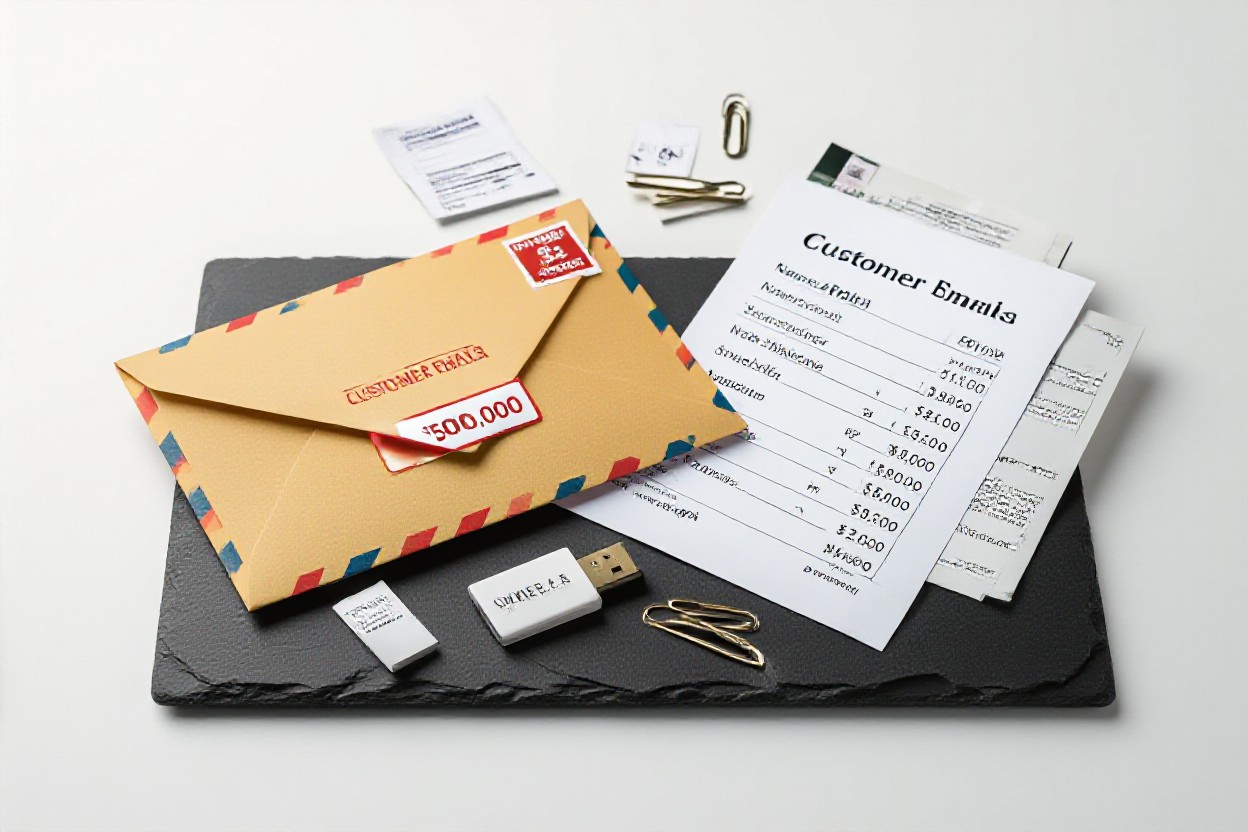
Why Past Customers Are Worth More Than New Leads
This matters to you because chasing cold prospects burns cash while past buyers already know and trust you, so they convert faster – and cheaper. Acquiring a new customer can cost about 5x what it takes to retain one, and boosting retention by 5% can lift profits 25-95%. Plus, repeat customers often spend up to 67% more over time, so that dusty list in your CRM? It’s probably your quickest path to serious revenue.
The Hidden Value of Your Previous Buyers
This matters because those folks carry far more than a name and email – they carry purchase history and preferences, which you can turn into predictable revenue. If you’ve got 1,000 past customers with a $50 average order value, a simple 5% reactivation sends $2,500 through the door. Segment by last purchase, send tailored offers, and you’ll see ROI far faster than any cold campaign.
Rekindling Old Relationships
This matters because re-engagement is low-effort and often high-reward; a short win-back sequence can recapture buyers who just need a nudge. Some small shops see 3-12% reactivation after a targeted 2-3 email series with a special offer, and that lift often costs a fraction of new acquisition spend. Want the quick win? Personalize the outreach and make the offer time-limited.
This matters because how you reach them decides whether they come back or ghost you – so be tactical. Segment lapsed buyers by recency, craft a 3-touch sequence over ~14 days (subject-line test on the first send), use a modest incentive on touch two, and follow with a reminder plus social proof. Try SMS after the email if you’ve got consent. Track who returns and calculate incremental LTV – then rinse and scale the winners.
What Your List Is Really Worth
This matters because your list is often the easiest path to predictable revenue – not some theoretical asset. If you have 3,000 subscribers and you run a campaign that converts at 2% on a $100 offer, that’s $6,000 in one send. And if your average campaign pulls in $6k three times a year, you’ve got $18,000 from an audience you already own. Small tweaks in open or conversion rates – even +0.5% – move real dollars, fast.
Measuring Your Email List’s Value
You measure it the way you’d value any asset: metrics. Track list size, open rate, click-through rate, conversion rate, average order value and churn. For example: 5,000 subs x 20% opens = 1,000 opens; 5% CTR = 50 clicks; 10% conversion = 5 sales. Multiply by AOV to get dollars-per-campaign. Use lifetime value (LTV) to estimate longer-term worth – a subscriber who spends $200 over a year is worth a lot more than one-off buys.
Turning Numbers Into Dollars
Start with simple math: subscribers x open rate x click rate x conversion x AOV = revenue per campaign. Say you’ve got 5,000 subs, 20% open, 4% click, 2% conversion and $50 AOV – that’s about $200 per campaign. Run 12 thoughtful sends and you’re at $2,400 annually, plus extra from automations. See? Numbers aren’t scary, they’re calculators for real income.
Now boost the levers: a segmented welcome series can convert at 5-10%, so that single automated flow can out-earn many broadcasts. Cart abandonment often recovers 10-12% of lost orders. Push personalization, test subject lines, and increase frequency smartly – small percent gains compound quickly and turn a dormant list into a steady revenue engine.
How Customer Comeback Calculates Recovery
How do they decide which lapsed customers are worth chasing? They build a weighted recovery score that blends recency, frequency, monetary value and engagement – typically Recency 40%, Frequency 25%, Monetary 20%, Engagement 15%, then run that through ML models (logistic regression + gradient boosting) to predict churn risk and projected CLV. If a customer scores above 70 they trigger an automated winback flow; typical results you can expect are an average recovered order of about $150 and a conversion rate near 12%.
My Take on the Recovery Process
Want my take on what actually works? You should focus on high-value lapsed customers, personalize messages, and test cadence – not spray-and-pray. Use email plus SMS, vary incentives, and A/B subject lines. I’ve seen a retail client lift recoveries by 35% and net an extra $5,000 in 30 days simply by swapping generic 20% off for a targeted reminder plus a time-limited 15% coupon.
Real-Life Success Stories
Curious how this plays out in real businesses? A neighborhood bakery reclaimed 120 customers and pulled in $12,000 in 60 days after a three-step winback push; a B2B SaaS reduced churn by 3.5%, preserving about $24,000 ARR. Those wins came from scoring, segmentation and tight follow-up – not huge budgets.
What did those teams actually do? They ran a 3-email + 1 SMS sequence on days 0, 3, 7 and a reminder at 14, A/B tested subject lines like “We miss you – 20% off” vs “A quick favor?” and limited discounts to top-score segments (usually 10-20%). Open rates hit ~45%, click-throughs ~12%, conversions ranged 9-15%, and LTV for recovered users jumped ~1.4x.
How the Emails Work
Why this matters to you: it’s how a list stops being just contacts and starts paying the bills. You run a few tight sequences – a welcome series, cart-abandon, and a re-engagement drip – and each one has measurable wins; for example, cart-abandon emails commonly recover 10-15% of lost orders, and a strong welcome flow often drives the first big purchase. Segment by action and time your offers, and you’ll see steady, predictable revenue instead of sporadic spikes.
Crafting Messages That Resonate
You want messages that feel personal, not like a blasted ad. Start with a subject line under 50 characters, one clear idea, and a single CTA – too many asks kill conversion. Use a short story or a quick proof point (a 2-line testimonial), and test two subject lines each send. Keep language conversational: ask a question, drop in a tiny surprise, and make the value obvious in the first sentence.
What to Include in Your Emails
Because every element earns attention, include these: a punchy subject, concise preview text, a single bold headline, the opening benefit, 1-2 short bullets, one primary CTA button, and a tiny social proof snippet. Use one clear CTA, keep images small (~200KB each), and always include a plain-text fallback and an unsubscribe link – yes, it helps deliverability and trust.
Example blueprint you can copy: Subject – “24‑Hour: 20% off your favorite jacket” Preview – “Limited stock, free returns” First line – benefit-driven, like “Stay warm and save 20%.” Two bullets with key features, price/discount, single CTA button “Shop Now.” Add a short testimonial and a P.S. with urgency. Personalize with the first name, test subject lines weekly, and clean out hard bounces monthly to keep your deliverability healthy. One CTA, one offer, one clear next step.
Running Your Revenue Scan
Run this scan and you’ll find hidden revenue in days. You slice your list by recency, value and behavior, then test offers and subject lines on small segments – quick wins add up fast. With typical email benchmarks around 20% open and 1-3% conversion, even a 1% lift on a 5,000 list at a $60 average order value nets about $3,000 per campaign, so you can’t afford not to run it.
Seriously, This Is a Game Changer
This audit turns dusty contacts into real cash. A boutique client reactivated 4,000 lapsed shoppers, got a 6% conversion on a $75 bundle and pulled in roughly $18,000 in a week – no paid ads. You’ll see which segments respond to price, urgency, or social proof, and that insight changes your promo calendar for months.
Steps to Get Started
You can do it in under an hour each week. Export your list, split into 0-30 / 31-180 / 181+ day buckets, tag the top 10% by spend, and run three micro-tests: subject line, offer, send time. Track open, CTR and revenue-per-recipient and scale the winner to the full segment.
Use simple tools and clear metrics. Start with Google Sheets or your ESP, pull sample sizes of 500-1,000 per variant for reliable A/B tests, and watch lift in revenue per recipient not just clicks. Try a win-back series for the 181+ group, a VIP early-access offer for top spenders, and a friction-free cart flow for recent buyers – those three moves typically double your short-term campaign ROI.
To wrap up
Summing up, like finding a $50 bill in an old coat you haven’t worn in years, your email list is silent cash waiting… You probably ignore it or only send the rare blast, but that little list can fund campaigns, test ideas, and keep customers coming back.
It can be your most profitable asset.
Want to turn it into predictable revenue? Start small, message like a human, and test – you’ll be surprised how fast it pays off.
FAQ
Q: What do you mean by “The $50,000 Email List Most Small Businesses Don’t Know They Have”?
A: You’re standing behind the counter at your shop, flipping through a shoebox of old signup cards and half a dozen email exports from different apps – and you wonder if any of that stuff is worth more than spam. That’s the scene I see a lot – businesses with years of customer contact info scattered across POS, booking tools, online orders and handwritten notes. Nobody called it an asset, so it got ignored. This “list” isn’t a single spreadsheet or one glamorous signup form. It’s a collection of past customers, one-time buyers, promo respondents and newsletter skim-readers who, if engaged right, can drive sizable revenue. Want a blunt take? A targeted, engaged subset of your list can pay your bills. So when people say “$50,000 list” they’re not talking magic – they’re talking real money you can get by reactivating and selling to people who already know you.
Q: How do I know if my business actually has that kind of list hiding in plain sight?
A: Start by gathering every place emails live – your POS, website backend, appointment tool, receipts, Facebook leads and even spreadsheets in someone’s Google Drive. Yes, that messy. Next, dedupe and count unique email addresses. If you’ve got 1,000 engaged customers, conservatively you can squeeze serious revenue from them over a year – through offers, upsells and repeat business. And here’s a quick filter to eyeball value: recent activity, purchase history and opt-in signals (clicked emails, coupon uses). Those are the folks you want first. If you find 2,000+ unique addresses with at least a few hundred showing any interaction in the last 12-18 months, you’ve likely got something worth $10k, $25k – maybe $50k or more depending on your margins.
Q: How do I estimate the monetary value of my email list?
A: Don’t overcomplicate it – use simple math. Figure your average order value (AOV), estimate a reasonable repeat purchase rate from email campaigns (even 2-5% per campaign is realistic), and multiply by how many campaigns you can run. Example: AOV $50 x 3% conversion x 1,000 responsive emails = $1,500 per campaign. Run 6 campaigns a year and you’re at $9,000. Add cross-sells and higher-margin offers and you climb fast. Break it out by segments – past buyers vs browsers vs coupon users. Each segment has different value-per-email. If you need a shortcut – pick conservative numbers. It’s better to undershoot than hype a number that vanishes when you actually send an email.
Q: What are quick wins to start monetizing that list right away?
A: First, send a re-introduction email – short, plain, human. Say who you are, why you’re emailing and offer something valuable – a time-limited discount, early access, or useful tips. People respond to familiarity. Second, segment immediately – past purchasers, high spenders, lapsed customers, newsletter-only. Then send tailored offers. Same product – different message. Third, run a small win-back campaign for lapsed buyers with a clear CTA and low friction (one-click booking, single-click reorder). Test subject lines, then double down on what works. And don’t forget to track. If an email brings in even one big order, it’s proof the list pays.
Q: What are the legal and permission pitfalls I should watch for?
A: Keep it simple and safe: only email people who opted in or those with a legitimate business relationship. If contacts came from orders or service bookings, that’s usually fine – but avoid blasting scraped or purchased lists. That’s a fast track to complaints. Include a clear unsubscribe link and honor opt-outs immediately. Spam complaints tank deliverability fast. If you’re in EU/UK, mind GDPR basics – have a lawful basis for processing and keep records. In the US, CAN-SPAM requires accurate headers and a visible unsubscribe. When in doubt – clean the list, send a re-permission email, and filter out hard bounces and repeated non-openers. It costs you little and saves headaches later.
Q: What tools and processes actually work for cleaning and segmenting this kind of list?
A: Use an email provider that shows opens, clicks and bounces – they make segmentation easy. Then run an initial hygiene pass: remove invalid emails, suppress hard bounces, and separate role addresses (info@, admin@) from personal ones. Next, create behavioral segments: recent buyers, repeat buyers, coupon redeemers, web-only subscribers. Automations are your friend – set up welcome flows, reengagement flows and win-back series. And do a simple re-engagement: subject line asking if they still want emails, short content, one-click unsubscribe. Those who click “yes” are gold. Those who ignore can be archived. You don’t need fancy AI tools to start – just consistent tagging, basic automations and a habit of cleaning monthly.
Q: What are the common mistakes that kill the value of an email list – and how do I avoid them?
A: Mistake one – treating the list like a spam wheel. Sending irrelevant, constant promos makes people tune out. Tone it down. Offer value, not just discounts. Mistake two – no segmentation. One-size-fits-all emails have terrible conversion. Even simple splits (buyers vs non-buyers) lift results big time. Mistake three – ignoring metrics. If open rates and clicks are tanking, stop blasting and test. Send fewer, better emails. Finally, not tracking ROI. If you don’t know which emails lead to revenue, you’re flying blind. Tag links, use promo codes, and check your sales reports – then act on what you learn.